- Reduced price
- 5%
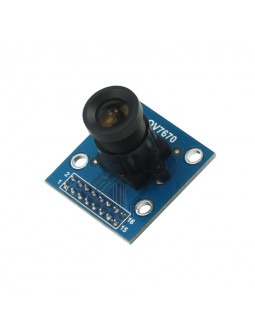
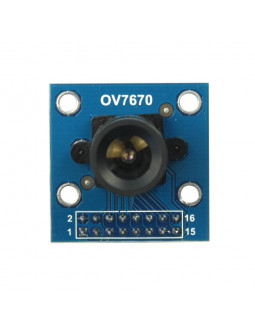

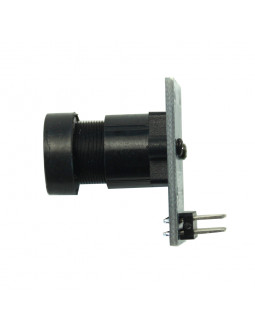
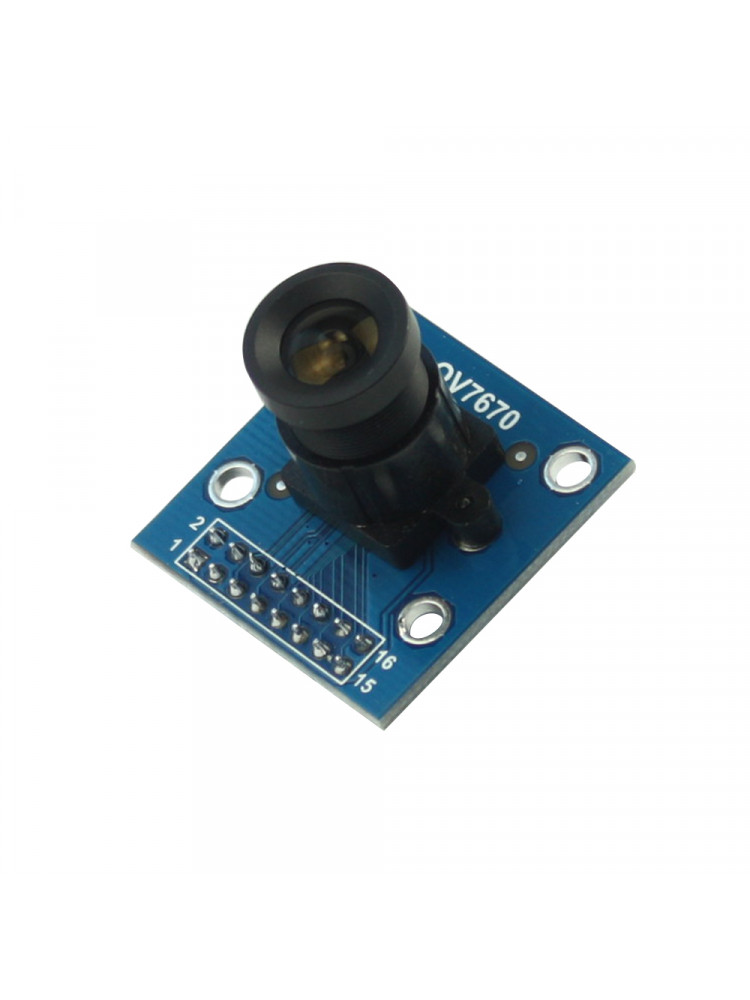
The OV7670 VGA Camera Module features a 640×480 VGA resolution, high sensitivity for low-light operation, and supports various output formats, including Raw RGB, YUV, and YCbCr. It also offers a range of automatic image controls such as exposure, gain, and white balance, making it suitable for applications in mobile devices, toys, and other battery-powered products.
The camera module features a 640×480 VGA resolution, high sensitivity for low-light operation, and supports various output formats, including Raw RGB, YUV, and YCbCr. It also offers a range of automatic image controls such as exposure, gain, and white balance, making it suitable for applications in mobile devices, toys, and other battery-powered products.
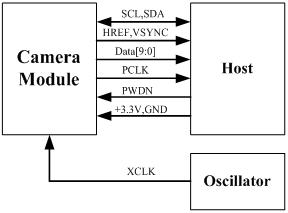
This system is powered by a 3.3V supply, with an external oscillator providing the clock signal. The camera transmits pixel data and synchronization signals to the host system, which could be an MCU, DSP, or FPGA with a dedicated camera interface. For systems without a camera interface, additional hardware like the ArduCAM shield is required to capture and process images.
This Arduino compatible camera comes with an F1.8/6 mm lens, it also supports AEC, AGC, AWB, ABF and ABLC and can be connected to most Arduino boards. The camera can be used for applications such as cellular phones, PDAs, Toys and other battery-powered products
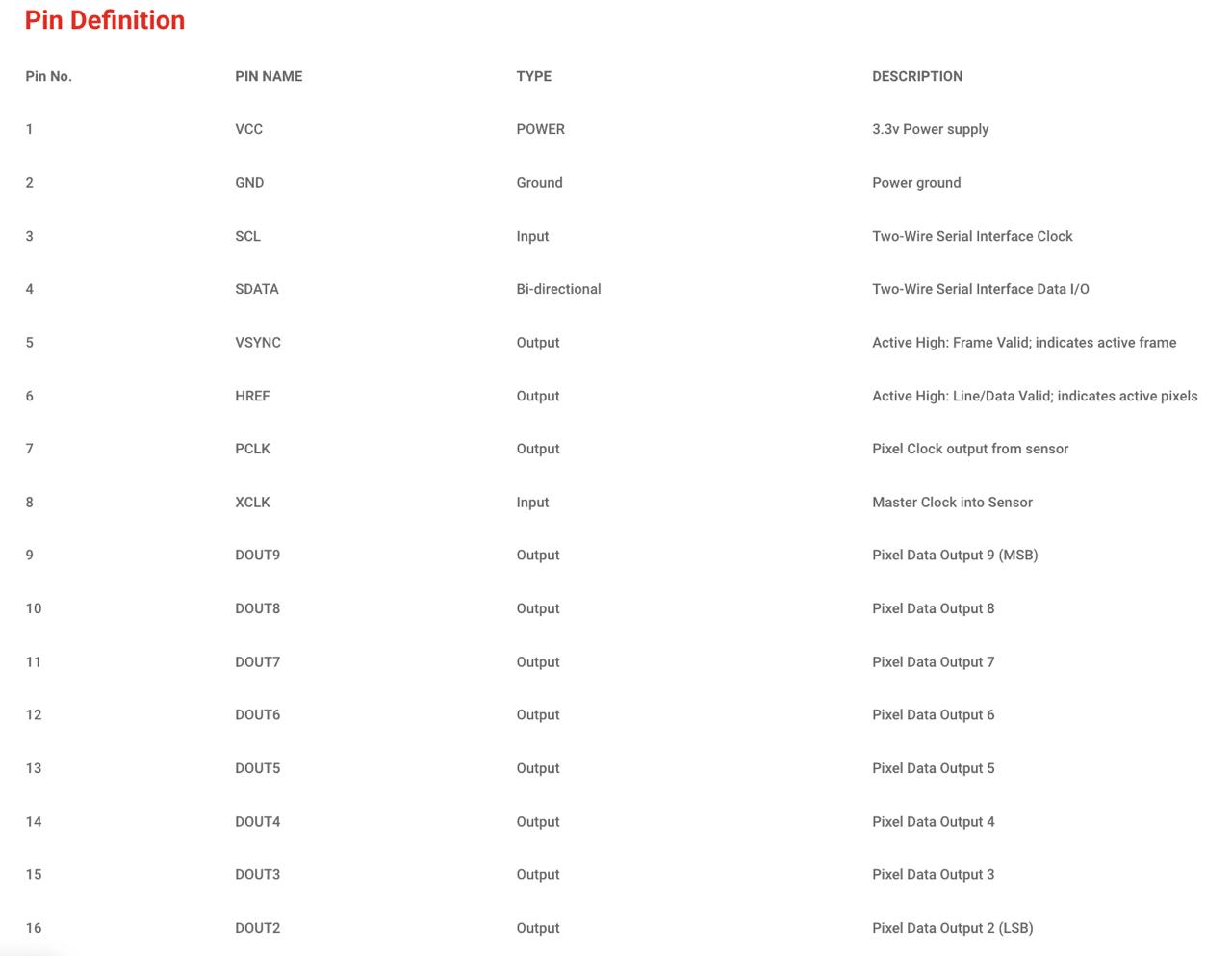
The following schematic diagram shows a basic camera-based system. The camera module is powered from a single +3.3V power supply. An external oscillator provides the clock source for the camera module’s XCLK pin. With proper configuration of the camera's internal registers via the I2C bus, the camera supplies the pixel clock (PCLK) and camera data (Data[9:0]) back to the host, along with synchronization signals like HREF and VSYNC.
The host may have an integrated camera interface, such as STM32F2 or STM32F4 series MCUs, or ARM9/11, which have dedicated camera ports, as well as DSPs like the TI TMS320DM series, and FPGAs where users can design special logic for camera applications. The typical connection between these systems and the camera module would look like the following diagram.
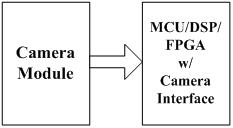
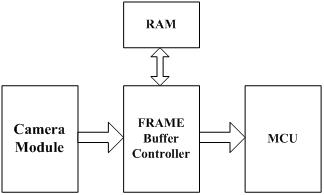
For hosts that do not have a dedicated camera interface, additional hardware is needed. Users will need to buffer an entire frame before reading it out with low-speed MCUs. For example, the ArduCAM shield is additional hardware that can be connected to Arduino UNO/Mega boards, allowing users to easily take photos or similar tasks. The following diagram shows the system without a dedicated camera interface.
• Optical Size: 1/6 inch
• Resolution: 640×480 VGA
• Onboard Regulator: Only a single 3.3V supply needed
• Compatible with Arduino, Maple, ChipKit, STM32, ARM, DSP, FPGA platforms
• Connector: Standard 0.1-inch (2.54mm) pin pitch header connector
• Lens: Mounted with high-quality F1.8 / 6mm lens
• Output Formats: Supports Raw RGB, RGB (GRB 4:2:2, RGB565/555/444), YUV (4:2:2), and YCbCr (4:2:2)
• Low-Light Sensitivity: High sensitivity for low-light operation
• Power: Low operating voltage for embedded portable applications
• Interface: Standard SCCB interface compatible with I2C
• Image Sizes Supported: VGA, CIF, and scalable down from CIF to 40×30
• Sub-Sampling: VarioPixel® method for sub-sampling
• Automatic Image Controls: Automatic Exposure Control (AEC), Automatic Gain Control (AGC), Automatic White Balance (AWB), Automatic Band Filter (ABF), and Automatic Black-Level Calibration (ABLC)
• Image Quality Controls: Color saturation, hue, gamma, sharpness (edge enhancement), and anti-blooming
• ISP Features: Includes noise reduction and defect correction
• Additional Features: Supports LED and flash strobe mode, scaling, lens shading correction, flicker (50/60 Hz) auto detection, auto adjustment of saturation (UV), edge enhancement level, and de-noise level.
• Program requires the latest ArduCAM library and ArduCAM Shield_V2 shield and use Arduino IDE 1.6.8 compiler or above.
• Datasheet
• ArduCAM provides a full demonstration for the OV7670 camera module on the Arduino platform. Please download the ArduCAM_Shield_V2_Camera_Playback.ino from GitHub. This will turn the ArduCAM into a real digital camera with capture and playback functions such as:
1. Preview live video on an LCD screen.
2. Capture and buffer the image to FIFO when the shutter is pressed quickly.
3. Store the image to a Micro SD/TF card in BMP format.
4. Playback captured photos one by one when the shutter button is held down for 3 seconds.
• 1 X OV7670 VGA Camera Module
The OV7670 VGA Camera Module features a 640×480 VGA resolution, high sensitivity for low-light operation, and supports various output formats, including Raw RGB, YUV, and YCbCr. It also offers a range of automatic image controls such as exposure, gain, and white balance, making it suitable for applications in mobile devices, toys, and other battery-powered products.