- New
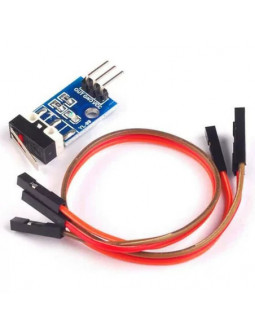
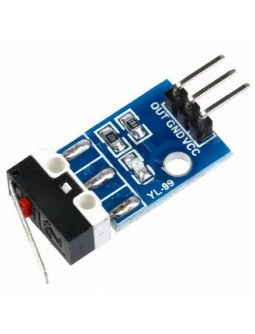
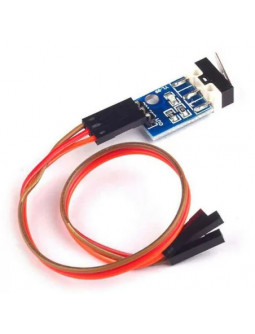

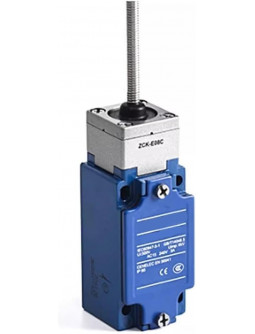
The Crash Sensor - YL-99 is a highly responsive physical impact detection module designed for robotics, vehicle navigation, and structural limit-switch configurations. Centered around a durable, long-arm mechanical miniature snap-action switch, it utilizes crisp physical lever mechanics to register real-time collisions immediately. This hardware breakout eliminates false signal triggers common with tilt or vibration sensors, providing a highly reliable and definitive digital output on contact. Built with a compact 3-pin interface footprint, on-board signal filtration, and a localized visual indicator, it serves as an essential, zero-fuss hardware-level obstacle detection barrier for autonomous rovers, smart quadcopters, and 3D printer home alignment axes.
The Crash Sensor - YL-99 is a highly responsive physical impact detection module designed for robotics, smart vehicle navigation, and structural limit-switch hardware configurations. Centered around a durable, long-arm mechanical miniature snap-action switch, it utilizes crisp physical lever mechanics to register real-time physical collisions immediately. This solid-state hardware breakout eliminates false signal triggers often associated with basic tilt or vibration sensors, providing a highly reliable and definitive digital output on contact. Built with a compact 3-pin interface footprint, on-board signal filtration, and a localized visual indicator, it serves as an essential, zero-fuss hardware-level obstacle detection barrier for autonomous rovers, smart quadcopters, and 3D printer home alignment axes.
The Crash Sensor - YL-99 provides an accessible, tactile, and highly versatile physical mapping solution for makers, hobbyists, and rapid prototyping applications. Traditional contactless sensors—such as infrared proximity modules or ultrasonic range trackers—suffer from performance bottlenecks when facing complex surface textures, direct sunlight glare, or sound-absorbing obstacles; this mechanical collision board bypasses those physical constraints entirely by executing triggers via absolute physical contact. The board features an internal circuit design that outputs a default HIGH logic signal during normal navigation, dropping sharply to a clean LOW digital level the instant the metal roller lever makes structural contact with a perimeter block or barrier. Outfitted with an integrated pull-up resistor framework, it interfaces directly with 3.3V and 5V microcontrollers like Arduino, Raspberry Pi, or ESP32 architectures without requiring external breadboard routing networks. Whether you are coding an autonomous maze-solving robot, designing a safety limit cutoff circuit, or building an edge-detection safety array, this compact module ensures clean, debounced mechanical feedback.
Take absolute control of your robot's physical perimeter boundaries without bloating your software logic layer. By shifting away from reflective optical components to this physical long-lever mechanical module, your navigation loop registers edge cutoffs instantly through direct hardware displacement, accelerating rapid prototyping assembly chains.
— Engineering focused on universal development simplicity. The multi-voltage 3.3V/5V configuration lets you link this collision node straight into diverse systems—such as 3.3V ARM modules, 5V microcontrollers, or single-board compute arrays—protecting sensitive internal loops from floating signal spikes.
- Reliable environmental feedback that is built to handle frequent usage cycles. Combining a tough impact-resistant fiberglass board layer with specialized internal voltage smoothing and a built-in pull-up matrix, this YL-99 board withstands aggressive obstacle impact spikes without dropping telemetry signals.
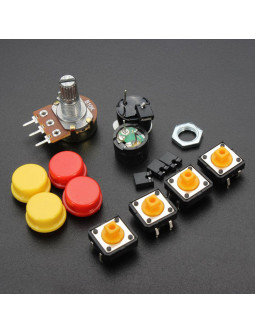
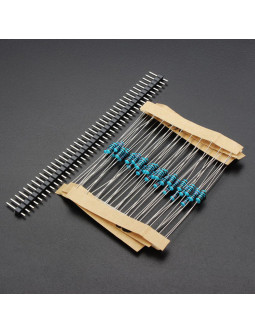
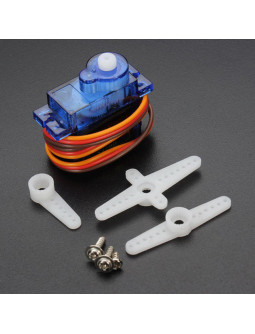
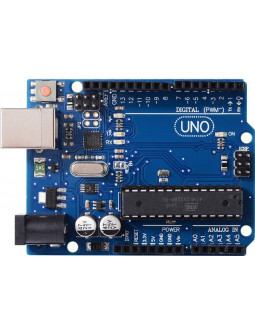
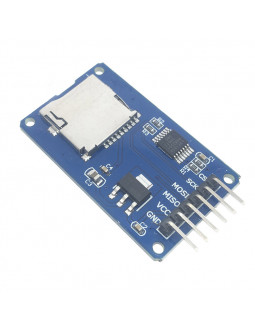

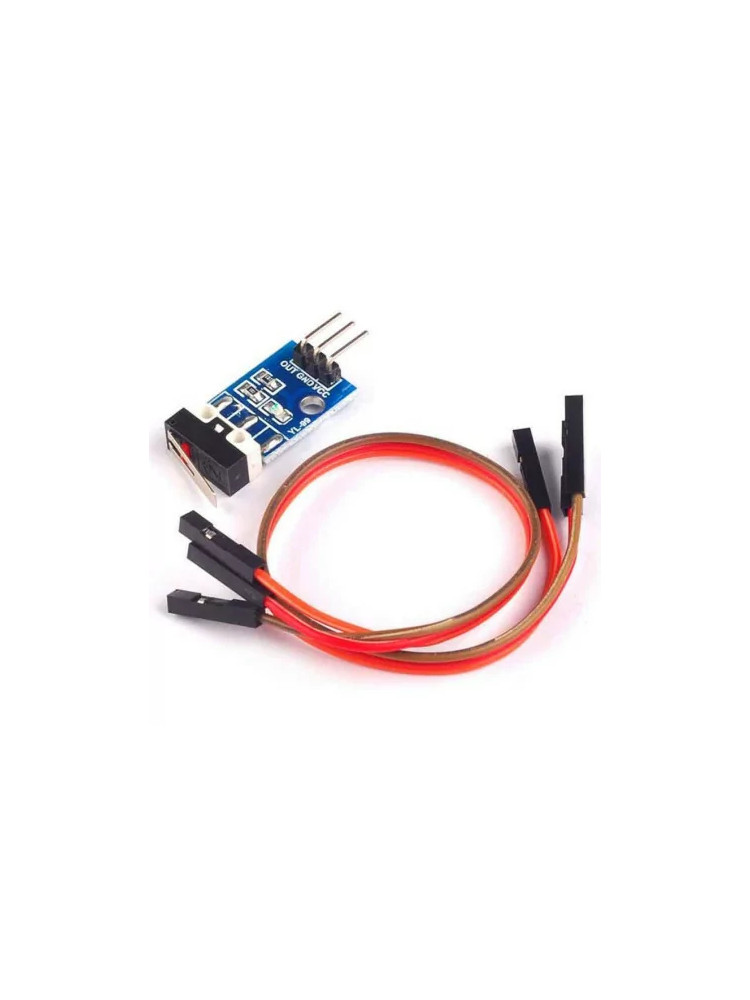
The Crash Sensor - YL-99 is a highly responsive physical impact detection module designed for robotics, vehicle navigation, and structural limit-switch configurations. Centered around a durable, long-arm mechanical miniature snap-action switch, it utilizes crisp physical lever mechanics to register real-time collisions immediately. This hardware breakout eliminates false signal triggers common with tilt or vibration sensors, providing a highly reliable and definitive digital output on contact. Built with a compact 3-pin interface footprint, on-board signal filtration, and a localized visual indicator, it serves as an essential, zero-fuss hardware-level obstacle detection barrier for autonomous rovers, smart quadcopters, and 3D printer home alignment axes.